Eric Bryden · Draconic Realms Creations

Contests

Follow my creative entries, the ideas behind them, and the opportunities that inspire me to keep learning, creating, and sharing through Draconic Realms Creations.

Preparing entryOctober 4–10, 2026Literature · Social media

2026 Banned Books Week Social Media Contest

Hosted by Sigma Tau Delta, NEHS and ELA Honor Society

Not submitted · No results yet
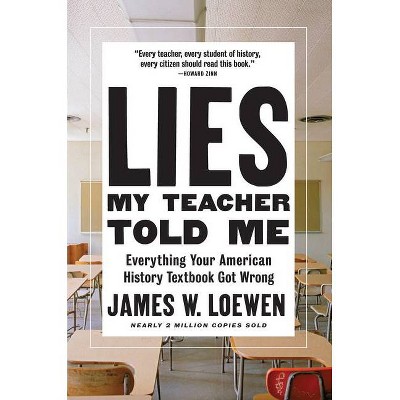
Reference cover of Lies My Teacher Told Me by James W. Loewen

Book cover reference · The New Press / Target

Entry photograph pending

Reference only—not Eric’s original contest photograph.

The idea behind the entry

History, perspective, and the freedom to read.

Lies My Teacher Told Me: Everything Your American History Textbook Got Wrong
by James W. Loewen

This entry brings together history, communication, and the freedom to read. James W. Loewen’s book offers an opportunity to question familiar textbook narratives and consider whose perspectives are represented—or left out.

The Columbus discussion is one reason the book interests me. Indigenous peoples had communities, cultures, and histories long before his arrival. Looking beyond the familiar ‘discovery’ narrative makes room for those perspectives.

In April 2025, Lies My Teacher Told Me was among 381 titles removed from the U.S. Naval Academy’s Nimitz Library during a review targeting diversity, equity, and inclusion materials. This is a specific historical removal—not a nationwide ban or a claim that the book is still removed. The Columbus discussion is not presented as the cause of its removal.

Entry caption

Who gets to decide which parts of history we are allowed to read? For Banned Books Week, I'm spotlighting Lies My Teacher Told Me: Everything Your American History Textbook Got Wrong by James W. Loewen. One topic that interests me is the story that Columbus "discovered America." Indigenous peoples already had communities, cultures, and histories long before his arrival. That makes me question whose perspectives our textbooks include—and whose they leave out. In April 2025, this book was among 381 titles removed from the U.S. Naval Academy's Nimitz Library during a review targeting diversity, equity, and inclusion materials. As a communication student and founder of Draconic Realms Creations, I believe we should examine evidence, question familiar stories, and have the freedom to read and reach our own conclusions. #BannedBooksWeek #FreedomToRead #LetBooksBe #DraconicRealmsCreations

Before entering

  • Take your own original photo of the book.
  • Explain a reason the book has been contested.
  • Enter on one platform: tag Sigma Tau Delta on Facebook, @EnglishMatters on Instagram, or @EnglishCon on X.
  • A second platform entry needs a second book.

Digital photo eligibility is not specified. A copied online book cover is not guaranteed eligible. Review the official rules before entering.

Read official rules

This page is a portfolio record, not a contest submission. No social post has been published or sent through this website.

Why this book is worth readingRead the research commentary

“Draconic Investigative Truth” — a separate commentary on the book. It is not a contest submission.
The next chapter

No additional contests have been added yet. Future entries and confirmed results will appear here as the work develops.

Worth Reading · Featured Book

Lies My Teacher Told Me: Everything Your American History Textbook Got Wrong

by James W. Loewen

Reference cover of Lies My Teacher Told Me by James W. Loewen

Book cover reference · The New Press / Target

Reference only—not Eric’s original contest photograph.

Eric’s recommendationWritten for this page — not a rating or a publisher endorsement.

I believe Lies My Teacher Told Me is worth reading because it encourages us to question familiar stories, examine evidence, and consider whose voices have been left out of American history. Its discussion of Columbus especially interests me. As a communication student and the founder of Draconic Realms Creations, I value books that give us something meaningful to investigate and discuss. Read it critically, compare its claims with other sources, and form your own opinion.

About the book · publisher description

Loewen examines twelve American history textbooks and challenges omissions and distortions in how history is presented.

Where to read it

Available in print and ebook; check your library for digital or audio borrowing options.

Formats, prices, and borrowing options vary by library and retailer, so local availability is not guaranteed here.

This recommendation reflects Eric’s interest in the book and its publicly available introduction. It is not a claim that he has finished reading it, and nothing here guarantees the accuracy of every claim in the book.

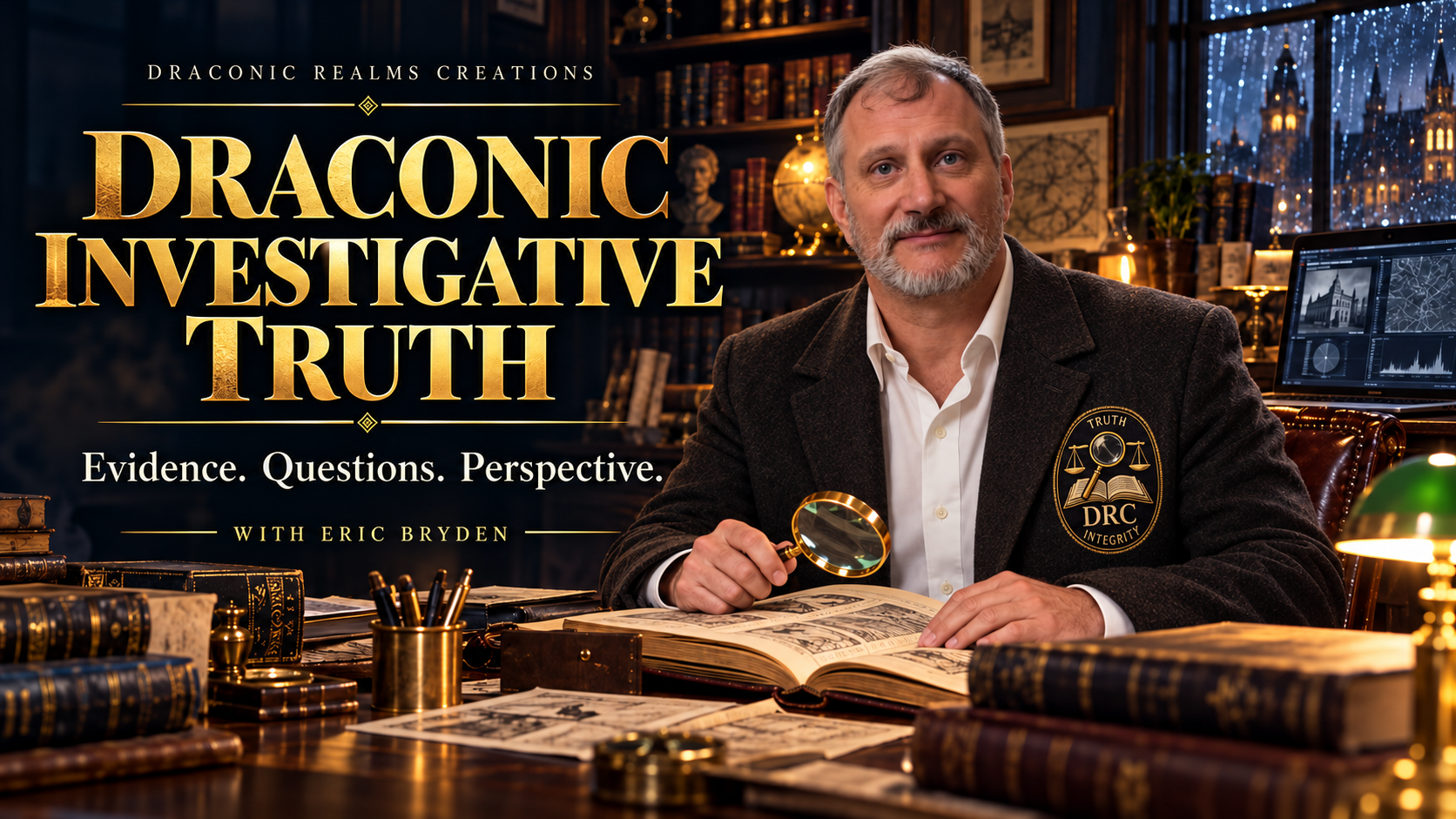
Eric Bryden as a detective at a research desk — Draconic Investigative Truth, Evidence. Questions. Perspective.
AI-assisted artwork using Eric Bryden’s portrait.

Draconic Realms Creations · Editorial series

Draconic Investigative Truth

Evidence. Questions. Perspective.

At Draconic Realms Creations, I investigate the stories we are told, check the evidence behind them, and share my perspective. Each investigation explains what I found, what the sources support, what remains uncertain, and where opinion begins.

Evidence categories

Supported by evidence
The linked sources back the claim.
Misleading or missing context
Part of the claim may rest on something real, but it overstates or omits what the sources show.
Contradicted by evidence
The linked sources show the claim is not accurate.
Unverified
The cited sources do not establish it. Unverified does not mean false.
Opinion
A personal judgment, not a factual finding.

Historical claims carry dates. A book removed from one place at one time is not automatically still banned.

Draconic Investigative Truth · Investigation 01

Who Gets to Tell America’s Story?

Exploring Lies My Teacher Told Me

By Eric Bryden · Draconic Realms Creations

Research commentary · First installment · October 7, 2026

This commentary sits alongside the contest record above. It is separate from the entry caption and is not the contest submission itself.

IntroductionWhy this series is starting.

History shapes how we understand ourselves. That is why I want to investigate the stories we repeat, the evidence behind them, and the people whose perspectives get left out. Through Draconic Realms Creations, I want to bring curiosity, integrity, and purpose to that conversation.

Author’s argumentWhat the book’s author claims — not a proven finding.

What Loewen argues

In the introduction to Lies My Teacher Told Me, James W. Loewen describes examining twelve American history textbooks. He argues that omissions, distortion, and simplified patriotic narratives can discourage critical thinking. That is the author’s argument, rather than a finding that every teacher deliberately deceives students. His work raises a question worth investigating: what happens when a textbook presents one account as the entire story?

Documented evidenceSupported by the linked source; nothing here is quoted from the book itself.

Investigating the Columbus story

The familiar statement that Columbus “discovered America” needs context. The Smithsonian’s National Museum of the American Indian explains that Indigenous peoples had populated the Western Hemisphere for tens of thousands of years before Columbus arrived. It also emphasizes the devastation of colonization and the continuing lives and cultures of Indigenous peoples. Columbus reached the Caribbean in 1492; those lands were already inhabited.

Eric’s opinionEric’s own view, written for this page.

When we describe a place as discovered, we need to ask, “Discovered by whom?” I believe teaching history should make room for the people already living there. Adding their perspectives gives us more to understand and question.

Documented evidenceSupported by the linked source; nothing here is quoted from the book itself.

Why this belongs under our contest

An April 15, 2025 joint statement from Lambda Legal and the NAACP Legal Defense Fund identifies this book among 381 titles removed from the Naval Academy’s Nimitz Library following a review of materials associated with diversity, equity, and inclusion. That documents a specific removal. It does not establish a nationwide ban, prove the book remains removed today, or show that its Columbus discussion caused the decision.

Eric’s opinionEric’s own view, written for this page.

My Draconic perspective

I believe uncomfortable ideas deserve examination. A textbook, a bestselling author, and an institution should all face questions about their evidence. Removing access to a book does not resolve the arguments inside it. Reading critically means being willing to challenge an author we agree with, too.

For me, investigative truth means checking claims, listening to different perspectives, identifying uncertainty, and correcting mistakes when the evidence calls for it. That is the standard I want this series to follow.

PlannedNot written yet.

Where this investigation goes next

The focused Columbus source review is now completed as Investigation 02 below. Comparing specific textbook passages with historical documents and exploring whose voices appear in each version remain planned; no textbook comparison has been completed.

What we checked / What we found

  1. Claim 1 · What we checked

    “Columbus discovered an uninhabited America.”

    What we found

    Contradicted by evidence

    The Smithsonian’s National Museum of the American Indian explains that Indigenous peoples had populated the Western Hemisphere for tens of thousands of years before Columbus arrived.

    Limits: This is a common “discovery” narrative under examination — not a direct quote from Loewen, and not an allegation that all textbooks describe the Americas as uninhabited.

  2. Claim 2 · What we checked

    “Columbus arrived in the Caribbean in 1492.”

    What we found

    Supported by evidence

    The Smithsonian places Columbus’s 1492 arrival in the Caribbean, in lands that were already inhabited.

  3. Claim 3 · What we checked

    “Lies My Teacher Told Me was removed from the Naval Academy’s Nimitz Library in April 2025.”

    What we found

    Supported by documented reporting

    According to an April 15, 2025 joint statement from Lambda Legal and the NAACP Legal Defense Fund, this title was among 381 books removed from the Nimitz Library during a review of materials associated with diversity, equity, and inclusion.

    Limits: This documents a removal as of April 2025. It does not show whether the book remains removed today.

  4. Claim 4 · What we checked

    “The book is banned everywhere in America.”

    What we found

    Misleading or missing context

    The cited incident establishes a removal at one institution’s library, not a nationwide prohibition.

    Limits: This investigation did not survey every school, library, or jurisdiction in the country.

  5. Claim 5 · What we checked

    “Its Columbus discussion caused the removal.”

    What we found

    Unverified

    The cited source places the removal within a broader DEI-related review. It does not establish that this book’s Columbus discussion was the reason.

    Limits: Unverified does not mean false — the available source simply does not answer this question.

  6. Claim 6 · What we checked

    “This book is worth reading.”

    What we found

    Eric’s opinion

    This is my personal recommendation, not a factual finding. My reasons are in the Worth Reading feature.

    Read the Worth Reading feature

Research notes

Date of research
October 7, 2026
Method
Reviewed the author’s publicly available introduction, publisher information, the Smithsonian National Museum of the American Indian, and the Lambda Legal / NAACP Legal Defense Fund removal statement. The full book was not reviewed for this investigation.
Correction policy
If stronger evidence changes a conclusion, I will update the article and explain the correction.

Next in this series

Planned themes only. None of these investigations has been written or published, so none of them is linked.

  1. Textbook narrativesCompare familiar textbook accounts with historical documents and the sources behind them.Planned
  2. Whose voices are representedTrace which perspectives are included and which are left out of each version of a story.Planned
  3. Responsible communicationExamine how claims are framed, shared, and corrected — and what responsible communication requires.Planned

Draconic Investigative Truth

Columbus: Discovery, Conquest, and the Stories We Were Told

By Eric Bryden · Draconic Realms Creations

Investigation 02 · Researched October 7, 2026

Completed focused source review · Textbook comparison still planned

Introduction

The question I want to investigate

The phrase “Columbus discovered America” sounds simple. The history behind it is not. What does “discovered” mean when people already live in a place? Whose experience does that wording put first?

This investigation follows the questions raised by James W. Loewen’s Lies My Teacher Told Me. I am checking a familiar historical narrative against museum, archaeological, and National Park Service sources. I am not assuming that every claim in a book is correct because its message interests me.

Documented evidence

Finding one: the Americas were already inhabited

Supported by evidence: Indigenous peoples lived in the Western Hemisphere long before 1492. The Smithsonian’s National Museum of the American Indian describes thousands of years of Indigenous presence and emphasizes that Native communities continue today.

That evidence contradicts any account that presents Columbus as arriving in an empty land. However, the phrase “discovered America” does not always literally claim the land was empty. Sometimes it describes a European perspective. Used without that context, it can still make the people already there seem secondary.

Documented evidence

Finding two: 1492 is real; the simplified label needs context

Supported by evidence: The Smithsonian identifies October 12, 1492 as the date Spanish ships landed at Guanahani. It describes the wider Caribbean as home to diverse Native communities with languages, political structures, and networks for exchanging goods and ideas.

Documented evidence

Finding three: Columbus was not the first European in North America

Supported by archaeological evidence: UNESCO identifies the remains at L’Anse aux Meadows in Newfoundland as an eleventh-century Norse settlement. That places documented European presence in North America centuries before Columbus’s voyage.

This does not make Indigenous history less important or mean the Norse “discovered” a land without people. It helps us test a narrower claim: Columbus was not the first European to reach North America.

Documented evidence

Finding four: exploration and colonial power belong in the same account

Supported by evidence: The National Park Service describes Columbus’s second voyage reaching Salt River Bay in 1493. It identifies Spanish goals that included claiming land, establishing settlements, seeking resources, spreading Christianity, and expanding power. It also describes a violent encounter with Indigenous inhabitants.

That account gives us reason to discuss colonization alongside exploration. It does not justify treating every later colonial act as something Columbus personally committed.

Eric’s opinion

My Draconic opinion

I believe we can recognize the importance of a voyage while also examining who paid the price for what followed. Respecting evidence means allowing a historical figure to be significant without turning that person into a flawless hero.

For me, ethical storytelling means being clear about whose viewpoint I am using. If I leave out the people already living in the story, I have given my audience an incomplete picture.

I want DRC to make room for questions that help people think. I do not want to replace one unquestioned story with another. The sources should lead the conclusion.

What this investigation does—and does not—establish

Six claims and findings, with reasoning, sources, and research limits
ClaimFinding
Indigenous peoples inhabited the Americas before 1492.

Supported by evidence.

Evidence category: Supported by evidence

The Smithsonian documents Indigenous presence long before 1492, with communities continuing today.

Columbus reached the Caribbean in 1492.

Supported by evidence.

Evidence category: Supported by evidence

The Smithsonian dates the landing at Guanahani to October 12, 1492.

Columbus was the first European in North America.

Contradicted by documented Norse archaeology.

Evidence category: Contradicted by evidence

UNESCO identifies an eleventh-century Norse settlement at L’Anse aux Meadows, centuries before the 1492 voyage.

Limits: This concerns European presence, not the beginning of Indigenous history.

“Discovery” adequately explains every perspective.

Our assessment: misleading without context.

Evidence category: Misleading or missing context

Eric’s assessment: a European-arrival label alone leaves out the experience of the people already there.

Limits: An assessment of framing, not a claim that every use of “discovery” literally means empty land.

Every teacher intentionally lied about Columbus.

Not established by this investigation.

Evidence category: Unverified

Historical sources and Loewen’s critique of textbooks do not establish the intent of individual teachers.

Limits: No teacher-intent investigation or comprehensive textbook survey was undertaken. Unverified does not mean false.

Loewen’s Columbus discussion caused his book’s library removal.

Not established by the sources reviewed.

Evidence category: Unverified

The April 15, 2025 statement describes a broader DEI-related review, not a demonstrated causal link to the Columbus discussion.

Limits: This historical removal statement does not establish causation or the book’s current library status.

The book and our next questions

Loewen’s publicly available introduction argues that textbooks can simplify, distort, and omit history. That is a reason to examine specific passages and their evidence, rather than accuse individual teachers of dishonesty.

Planned · Textbook passage comparison

Next, I want to compare a specific textbook passage with the historical evidence. That comparison is planned; no textbook excerpt has been supplied for this installment.

Research notes

Date of research
October 7, 2026
Method
A focused review of the linked institutional history sources and Loewen’s public introduction. This is not a full review of the book, a comprehensive survey of textbooks, or firsthand archival research. Research and drafting assisted by AI.
Correction policy
If stronger evidence changes a conclusion, I will update the article and explain the correction.
Back to series contents